Home / Powder Coat Versus Liquid Paint Over Steel
Powder Coat Versus Liquid Paint Over Steel
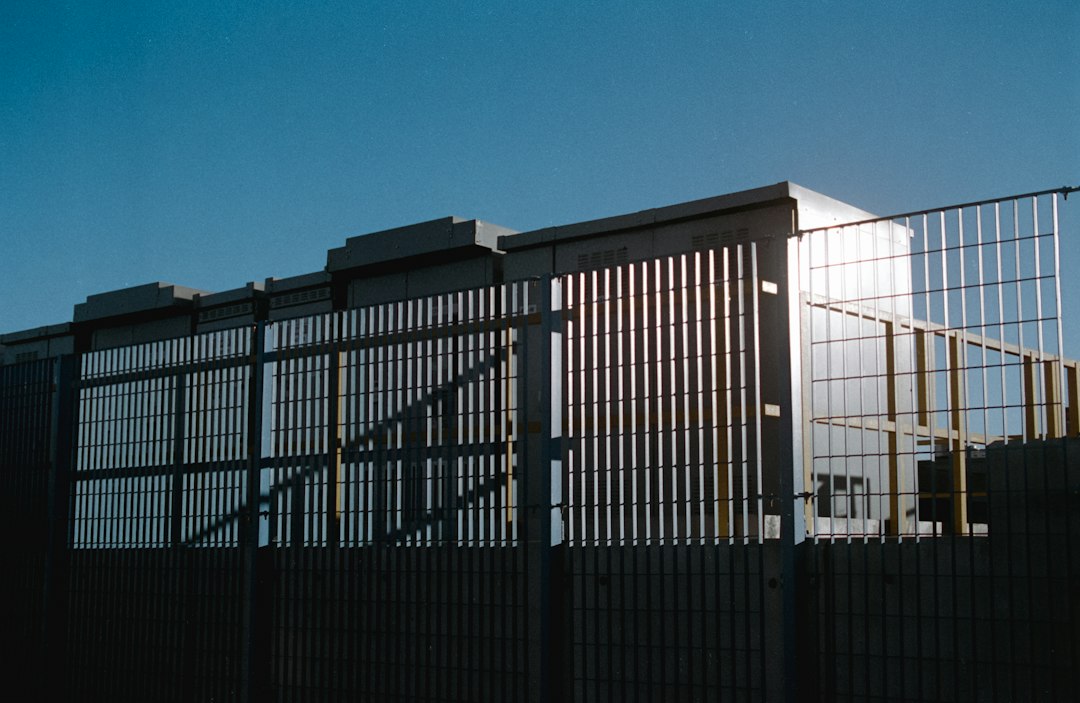
Powder coat and liquid paint both protect steel, but they get there by different routes, and the difference shows up in thickness, hardness, repairability and how each holds up under strong sun. Powder coat is a baked-on plastic skin that is tough and uniform, while liquid paint is a sprayed or brushed film that is easier to touch up and can be applied to a gate that is already installed. Neither is simply better, and the right choice depends on the gate and the owner.
Understanding how each system is applied explains most of its strengths and weaknesses. The process determines film thickness, coverage in tight corners, and the way each one fails when it eventually wears out.
How powder coating is applied
Powder coating starts with a fine dry powder made of resin, pigment and additives. The cleaned metal part is given an electrical charge opposite to that of the powder, and a spray gun blows the powder toward it. The particles cling to the part like static cling on a sweater, forming an even layer. The part then goes into an oven, typically heated to around four hundred degrees Fahrenheit, where the powder melts, flows together and chemically cures into a hard, continuous film.
The result is a skin that is often several times thicker than a single coat of liquid paint, with no runs or drips because there is no solvent to flow. Because the powder is sprayed dry, thick coverage can be built in one pass, and any overspray can be collected and reused.
The oven is the limiting factor. Parts must fit inside it, which restricts the size of a single piece, and the metal must tolerate the heat. A large gate is usually coated in sections or as separate panels, then assembled. Welding after coating burns the finish, so fabrication must be complete before powder is applied.
How liquid paint is applied
Liquid paint carries its resin and pigment in a solvent or water carrier. It can be sprayed with conventional or airless equipment, brushed, or rolled. As the carrier evaporates, the film hardens, either through air-drying or through a chemical reaction between components, as in two-part epoxy and polyurethane systems.
The strength of liquid systems is flexibility of use. A gate can be painted in place, after installation, with no oven. Touch-up is simple, because a small container of matching paint and a brush can repair a chip. Color choices are broad, and special effects such as metallic or textured finishes are easy to create.
The weakness is thickness control. Liquid paint tends to pull away from sharp edges and sag on vertical surfaces, so edges carry thinner coverage than flat areas. Multiple coats build thickness, and each coat must dry and bond before the next one goes on.
Hardness and wear
A cured powder coat is hard and resists scratching, chipping and abrasion well. This suits a gate that gets bumped, brushed by vehicles or handled often. The hard film also resists many household chemicals and cleaning products.
Liquid paints vary. A high-quality two-part polyurethane over an epoxy primer can be very durable and glossy, nearly matching powder in toughness. Single-component enamels are softer and wear faster. Because the film is thinner overall, a deep scratch reaches the primer or metal sooner.
When either system is chipped to bare steel, the exposed metal begins to rust, and the rust can creep underneath the surrounding film. A thick, hard film is harder to chip, but once chipped it can be harder to blend a repair into, because powder coat cannot simply be brushed on again.
Sun and weather
Polyester powder coatings made for exterior use resist ultraviolet breakdown well and keep color for many years. Epoxy powders offer excellent adhesion and chemical resistance but chalk quickly in sunlight, so they are used as primers under a polyester topcoat on gates that will see full sun. A two-coat powder system, with epoxy beneath and polyester above, gives both adhesion and weather resistance.
In liquid systems, the same logic applies. Epoxy primers bond well and protect against moisture, and a polyurethane or acrylic urethane topcoat resists sunlight and holds gloss. A single coat of general-purpose enamel will fade and chalk sooner, particularly in dark colors facing the afternoon sun.
In the Leander climate, with strong ultraviolet exposure and high surface temperatures, either system should be specified for exterior use and applied over a primer chosen for it.
Preparation decides the outcome
For both systems, the coating is only as good as the surface under it. Steel must be free of mill scale, oil, rust and weld residue. Abrasive blasting to a uniform profile is the usual preparation for powder, and often for premium liquid systems. A chemical pretreatment, such as a phosphate or zinc conversion layer, adds adhesion and corrosion resistance beneath the finish.
Welds, edges and cut ends need attention. Welds should be ground and cleaned, edges slightly rounded and cut ends sealed. A shop that spends time on this stage usually delivers a longer-lived gate than one that rushes straight to color.
Repair and touch-up
Here liquid paint has the advantage. A chip in a painted gate can be cleaned, primed and painted on the spot, with a result that is nearly invisible if the color match is good. Powder coat is harder to repair locally. Small chips can be touched up with liquid paint formulated to match, though the sheen and texture may differ slightly. Large damaged areas generally require stripping and recoating the entire panel.
Owners should keep a record of the color name, code and manufacturer for whichever system was used. Ordering matching touch-up material years later without that information is guesswork.
Appearance and options
Powder coat offers a vast color range, including textures such as wrinkle, hammer-tone and sand finishes that hide small flaws and imperfections. Metallic and vein-effect finishes are available but can be tricky to match for repairs.
Liquid paint gives the widest control over color matching, since a shop can tint a batch to a sample. It also allows custom effects such as faux finishes and graduated colors. On a gate that must match an existing painted fence or architectural detail, liquid paint is often the easier route.
Choosing between them
Several practical questions guide the decision.
- Is the gate new and fabricated in a shop, or already installed and needing a refresh?
- Can the sections fit into an oven, and will welding be complete before coating?
- How much impact and wear will the surface face?
- Does the owner want to be able to touch up chips at home?
- Is an exact color match to existing elements needed?
For new, shop-built steel gates, powder coat over a galvanized or pretreated surface is a common and durable choice. For field repainting, or where easy touch-up matters, a quality epoxy and urethane liquid system is a strong option.
A balanced conclusion about the two
Neither system rescues a gate from poor preparation or poor design, and either lasts for many years when applied properly over clean metal and kept clean. The decision comes down to how the gate is built and how the owner expects to care for it. A conversation with the fabricator about thickness, primer, cure and repair options tells far more than the name of the coating on the quote.